





Easy Trenchless Pipe Bursting in Tacoma: How It Works
Trenchless Pipe Bursting in Tacoma lets you replace worn sewer pipes with far less mess. For homeowners and businesses, old lines can feel stressful. However, newer methods avoid big trenches and long timelines. Because it uses minimal digging, your lawn and driveway often stay neat. As a result, cleanup is simpler and the impact is lighter.
Even better, the approach can cut waste and reduce disruption. Therefore, you can upgrade a damaged system while keeping curb appeal. In addition, the work is often faster than open-trench methods. Over time, that convenience can make planning easier and more predictable.
How the Technology Works
This method replaces an old pipe by splitting it and pulling in a new one. First, crews guide a bursting head through the existing lateral line. Then, the head cracks the old pipe as it moves forward. At the same time, a new pipe is pulled into place behind it. Consequently, only small access points are needed.
Moreover, hydraulic force or a winch powers the pull. As the old pipe breaks, fragments press into the surrounding soil. Meanwhile, the new pipe—often high-density polyethylene—offers strong, corrosion-resistant service. As a result, many property owners see a clean upgrade without major surface damage.
Benefits of Trenchless Pipe Bursting in Tacoma
Trenchless Pipe Bursting in Tacoma helps protect landscaping, sidewalks, and driveways. Instead of long trenches, crews often use two small pits. Therefore, daily routines can return sooner. In addition, lighter equipment may reduce waste and site impact. Finally, the new pipe can help reduce future root issues and ongoing repairs.
Less surface disruption, so outdoor areas stay usable
Faster project flow, so downtime is often shorter
Cleaner jobsite, because less soil is removed and hauled
Durable new pipe material designed for long service life
Getting Your Property Ready
Before work begins, review utility maps and request needed approvals. Also, tell neighbors if shared connections could be involved. Next, mark property boundaries and visible utility points. As a result, the crew can plan access safely and avoid surprises. In addition, clear the work zone near the planned entry and exit pits.
Call for utility locating and mark known lines
Move planters, trim shrubs, and clear access areas
Set aside space for staging and safe vehicle parking
Share any prior inspection notes or backup history
What Happens During the Work
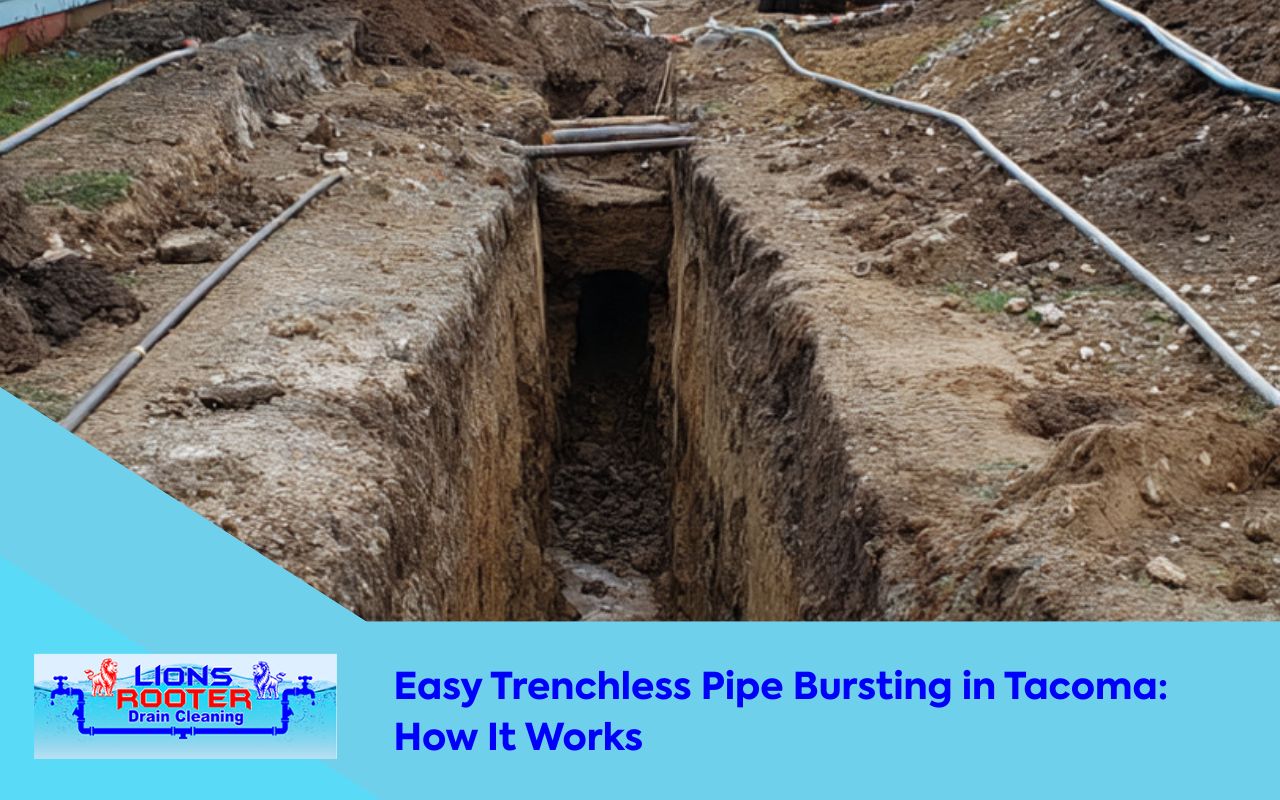
During Trenchless Pipe Bursting in Tacoma, crews first dig two small pits at the ends of the damaged section. Next, they insert the bursting head into the old pipe path. As the head advances, it breaks the existing pipe and pulls a new one behind it. Consequently, the surface stays more intact than with open digging.
After the tool reaches the far pit, technicians cut the new pipe to length and connect it to the system. Then, they test for leaks and restore the surface. Finally, the pits are backfilled and the site is cleaned. Therefore, you can often return to normal use quickly.
Tools Used on the Job
Crews use specialized equipment to keep the work controlled and safe. Typically, a hydraulic power pack or winch provides the pulling force. Meanwhile, the bursting head expands outward to fracture the old pipe. In addition, pulling rods and fusion tools may be used for longer runs. As a result, the new line is installed with steady alignment.
Camera inspections also help confirm conditions before and after the pull. Sometimes, support gear like vacuum trucks helps manage soil and cleanup. Therefore, the job stays organized, and the final connections can be verified with clear visual checks.
Planning the Budget and Scope
Project needs vary by length, pipe size, soil type, and access. In tight spaces, crews may need more setup, which can affect labor time. Additionally, material choice and connection points influence the final plan. For planning details on sewer replacement, review the factors in sewer line replacement cost factors so you can compare what drives complexity.
Also, permits can change the timeline. To avoid surprises, use this Pierce County sewer permit guide when you map out next steps. As a result, you can align scheduling with local requirements and inspection needs.
Care Tips After the Install
After the new pipe is in place, simple habits can help prevent issues. First, avoid grease, fibrous scraps, and heavy buildup. Next, watch for slow drains and respond early. In addition, consider periodic camera checks if your property has a history of clogs. For prevention insights, see root intrusion in sewer lines and apply the recommended habits.
Flush with water regularly and keep drains clear
Use gentle cleaning methods instead of harsh chemicals
Plant trees away from the pipe path when possible
Schedule an inspection if you notice repeated slow draining
Choosing a Trusted Local Contractor
To hire for Trenchless Pipe Bursting in Tacoma, start with licenses, insurance, and proven experience. Then, read reviews focused on cleanup, communication, and follow-through. Also, ask for examples of similar projects and warranty terms. If you want a broader overview of trenchless options in your area, read trenchless sewer repair in Pierce County and compare methods that fit your site.
Finally, bring your questions to the initial visit. For example, ask how access pits will be placed and how testing will be done. As a result, expectations stay clear and the plan stays practical. When you’re ready to discuss scheduling and site details, use the contact page for trenchless service questions to share your property notes.
Real-World Examples in Tacoma
One homeowner avoided major yard damage by using two small access pits, instead of a long trench. As a result, flower beds and a walkway stayed mostly intact. The work wrapped up quickly, and normal outdoor use returned soon. Meanwhile, the new pipe delivered reliable flow without weeks of surface repair.
A small café had repeated backups that threatened business hours. Traditional digging would have caused longer downtime. Instead, the crew completed the core work with limited surface disruption. Consequently, the café reopened with little visible impact. Over time, the new line helped reduce repeat problems and surprise closures.
Frequently Asked Questions
Is this method good for most older sewer lines?
Often, yes. However, a camera inspection should confirm the pipe path and condition. If the old line can guide the tool safely, this method may work well. Therefore, an evaluation is the best first step.
How much digging is still needed?
Usually, crews create small access pits at the start and end of the damaged section. As a result, you avoid long trenches across the yard. Still, access needs depend on depth, connections, and site layout.
Will the new pipe handle roots and corrosion better?
In many cases, yes. Modern materials can resist corrosion and reduce common entry points for roots. In addition, proper joints and good flow habits help long-term performance. Therefore, maintenance remains important even after installation.
Do I need permits before work begins?
Sometimes, yes. Local rules can require permits and inspections for sewer work. Because requirements vary, it helps to check early. As a result, you can avoid delays and keep scheduling smooth.
How do I know which contractor to trust?
Look for licensing, insurance, clear warranty terms, and documented experience with trenchless tools. Also, prioritize contractors who explain testing and restoration steps. Consequently, you get fewer surprises and a clearer plan from day one.
A Cleaner, Lower-Impact Way to Restore Flow
With Trenchless Pipe Bursting in Tacoma, you can protect your property while restoring service in a modern way. Because the approach limits surface disruption, it helps preserve landscaping and daily access. In addition, it supports a cleaner jobsite and less waste. Therefore, when sewer trouble shows up, this option can be a practical path forward.