





Recognize Laundry Drain Clog Symptoms Early
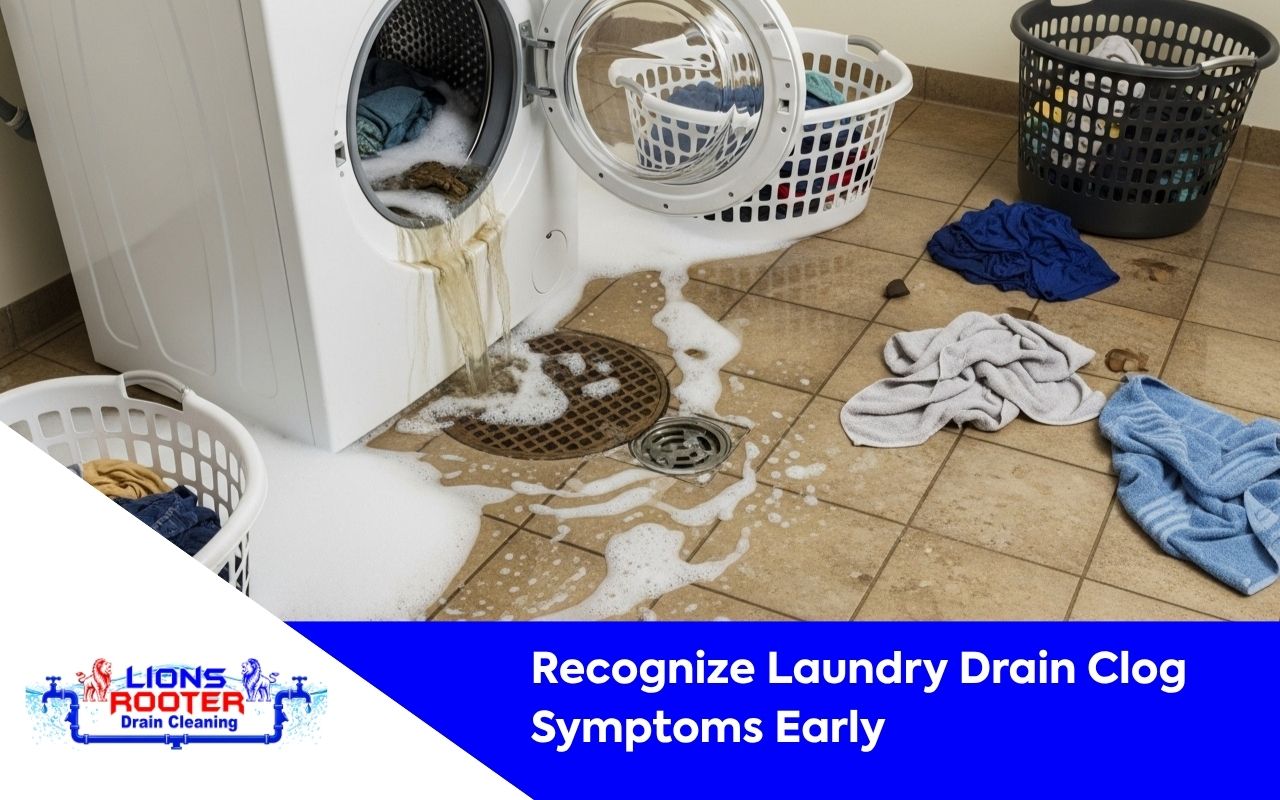
Have you noticed a bad smell, slow washer drain, or water near your laundry area? These may seem small at first, but laundry drain clog symptoms can quickly lead to washer backup, drain overflow, and floor damage.
At Lions Rooter Drain Cleaning, we help homeowners spot these warning signs before they become messy problems. With the right steps, you can reduce lint buildup, protect your utility sink, and keep laundry day simple.
Small Drain Problems Can Grow Fast
Ignoring laundry drain clog symptoms can make a simple blockage much worse. Water may begin to drain slowly, then return through the washer hose or utility sink. When pressure builds in the line, dirty water can spill onto the floor.
Our team at Lions Rooter Drain Cleaning often sees clogs caused by lint, soap, hair, and small fabric pieces. Over time, these materials stick inside the pipe and narrow the drain path. As a result, each wash cycle becomes more likely to cause a backup.
Clear Visual Signs Around Your Washer
Some warning signs are easy to see when you know where to look. Check the washer, floor, and nearby sink after each cycle. Even a small puddle can point to a drain issue that needs attention.
Standing water inside the washer after the cycle ends
Water rising in the utility sink during washer drainage
Small puddles near the washer drain hose
Wet marks, stains, or soft spots on the floor
Dirty water sitting longer than usual in the sink
These signs may mean lint buildup or soap waste is slowing the line. For deeper drain concerns, our drain cleaning service can help clear the blockage safely.
Sounds And Smells You Should Notice
Strange sounds can be an early warning. Gurgling, bubbling, or sucking noises often happen when air is trapped behind a clog. If these sounds happen during the rinse or spin cycle, the drain may not be moving water fast enough.
Bad smells are another common sign. A musty or sewer-like odor near the washer or utility sink can mean trapped waste is sitting inside the pipe. When odor keeps coming back after cleaning, the clog may be deeper than it looks.
Why Does Your Washer Back Up?
A washer backup usually happens when water leaves the machine faster than the drain can carry it away. This can happen because of lint buildup, a bent drain hose, soap residue, or a clog farther down the line.
Laundry drain clog symptoms may also show up in other parts of the home. For example, a nearby sink may drain slowly, or a toilet may gurgle while the washer runs. These signs can point to a larger drain problem.
Puddles And Overflow Need Quick Action
Mystery puddles should never be ignored. First, check the washer hoses and connections. Then, look at the drain pipe and nearby floor. If the hoses look dry but water still appears, the drain may be forcing water back out.
A drain overflow can damage flooring, trim, walls, and stored items. It can also create damp areas where mold may grow. At Lions Rooter Drain Cleaning, we recommend acting early when water appears more than once after laundry use.
Simple Ways To Prevent Laundry Clogs
Good habits can help reduce clogs before they start. Small steps after each wash can keep lint, soap, and debris from building up inside the drain line.
Use a lint trap on the washer drain hose
Clean the lint trap after several loads
Run hot water through the utility sink often
Wipe the washer seal and drum after use
Clean the washer pump filter every few months
You can also flush the drain with baking soda, vinegar, and hot water once a month. However, avoid harsh cleaners that may harm older pipes. If laundry drain clog symptoms keep coming back, a deeper cleaning may be needed.
Frequently Asked Questions
What are the most common laundry drain clog symptoms?
The most common signs include slow washer drainage, gurgling sounds, bad smells, standing water, and water rising in the utility sink. These signs often mean lint or soap waste is blocking the drain.
Can lint buildup really clog a laundry drain?
Yes, lint buildup is one of the main causes of laundry drain clogs. Small fibers can collect inside the pipe and mix with soap residue, which slowly blocks water flow.
Is washer backup always a serious problem?
A washer backup should be handled quickly, even if it starts small. It can lead to drain overflow, water damage, and repeated clogs if the cause is not removed.
When should I stop trying to clear the drain myself?
Stop if the clog returns, water overflows, or more than one fixture drains slowly. When customers contact Lions Rooter Drain Cleaning, we can inspect the line and clear hidden blockages with the right tools.
How can I get help with a clogged laundry drain?
You can reach our team through our contact page. We will help you choose the right next step for your laundry drain issue.
Get Reliable Help Before Damage Spreads
Some clogs need more than a plunger or home cleaner. When laundry drain clog symptoms keep returning, the safest choice is to have the line checked before water damage spreads.
Call when washer water backs up more than once
Get help if the utility sink fills during each load
Ask for service when bad odors keep returning
Request urgent help for active drain overflow
With Lions Rooter Drain Cleaning, you get clear guidance when your laundry drain needs fast attention. For urgent issues, visit our emergency plumbing service or send us a message through our contact page.