





Cleanout Cap Maintenance for Safer Home Drains
Cleanout cap maintenance helps protect your home from slow drains, bad smells, and messy sewer backups. At Lions Rooter Drain Cleaning, we know this small part can make a big difference in daily comfort and backup prevention.
Regular care also keeps the sewer cleanout easy to reach when a repair or inspection is needed. With simple habits, you can spot early issues before they turn into a stressful plumbing problem.
Why Cleanout Caps Matter for Home Drains?
A cleanout cap covers a main access point to your sewer line. When the cap stays sealed and easy to open, plumbers can reach the line faster and clear problems with less disruption.
Cleanout cap maintenance also helps stop dirt, water, and loose debris from causing trouble around the opening. Our team at Lions Rooter Drain Cleaning can guide you when the cap looks damaged or hard to open.
Know Your Sewer Cleanout Access Point
Your sewer cleanout may be in a basement, garage, crawl space, yard, or near an outside wall. It often looks like a round plastic or metal cap connected to the main drain line.
Knowing where it is can save time during a plumbing issue. For more help understanding this part of your system, review our guide to sewer cleanout installation.
Simple Tools That Make Maintenance Easier
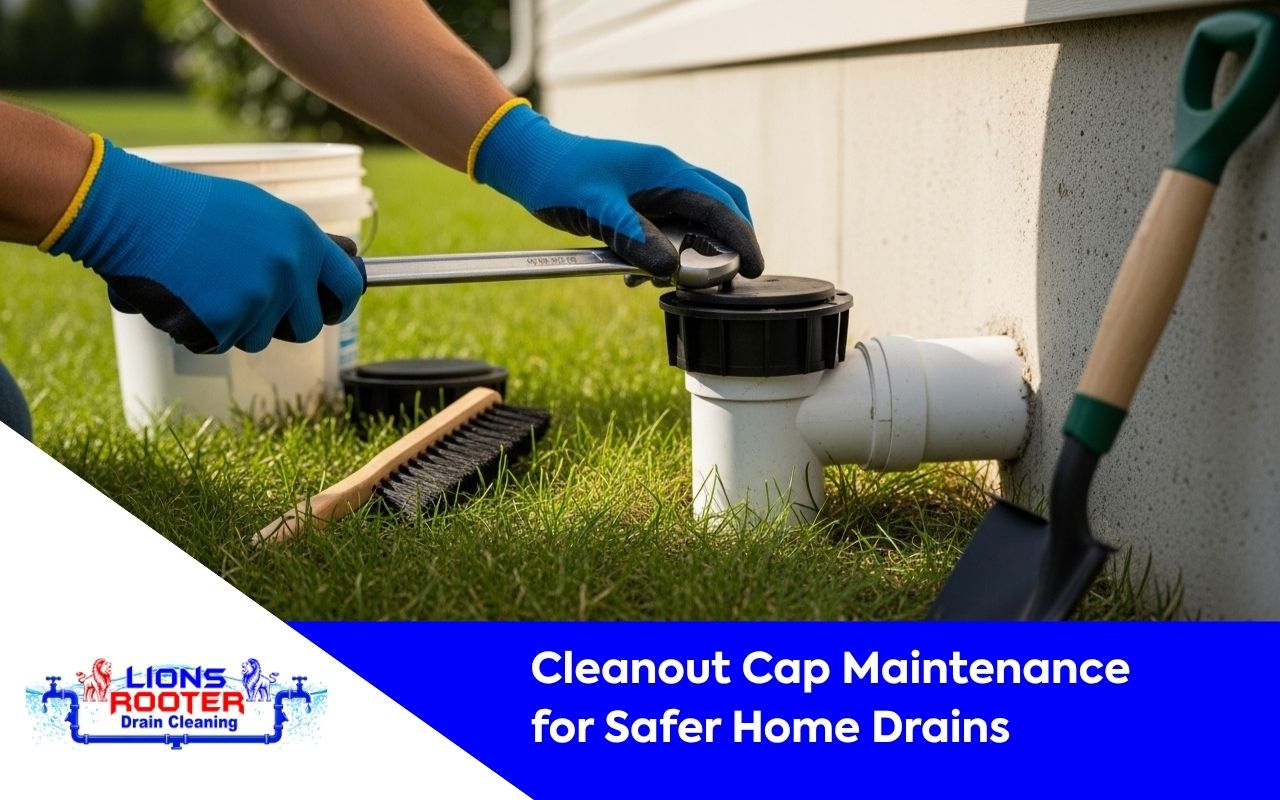
Basic tools can make cleanout cap maintenance safer and cleaner. Keep everything nearby before opening or checking the cap.
Waterproof gloves to protect your hands
A bucket and rags for small spills
An adjustable wrench for tight caps
A flashlight for a clearer inspection
A small brush to remove dirt around the cap
Safe Steps to Clean and Check the Cap
Start by clearing leaves, soil, or loose debris around the cap. This keeps dirt from falling into the pipe when you open the access point.
Place a bucket near the cap before loosening it.
Turn the cap slowly and stop if pressure or water appears.
Check the threads, seal, and nearby pipe for cracks.
Clean the cap gently before putting it back in place.
Tighten it snugly, but do not force it.
When customers contact Lions Rooter Drain Cleaning about a stuck or damaged cap, we explain the safest next step before any work begins.
Warning Signs You Should Never Ignore
Some signs point to a deeper drain issue. A fast response can support backup prevention and protect your home from damage.
Sewer smells near the cleanout area
Water pooling around the cap
Slow drains in several rooms
Gurgling toilets or tubs
Cracks, rust, or loose cap threads
When Professional Inspection Makes More Sense
Some problems need more than basic cleaning. Root growth, deep clogs, damaged pipe sections, and repeat backups often require special tools and a full inspection.
Our team can use camera equipment to see inside the line and find the cause more clearly. Learn more about sewer camera inspection when drain issues keep coming back.
Frequently Asked Questions
How often should I check my cleanout cap?
Most homes benefit from a check twice a year. Older homes, trees near sewer lines, or past backups may call for more frequent inspection.
Can I open the sewer cleanout by myself?
You can check the outside of the cap and clear the area. However, avoid opening it if you notice pressure, standing water, or strong sewer smells.
What happens if the cap is loose?
A loose cap can allow odors, water, or pests into the area. It can also make backup prevention harder because the access point may not seal correctly.
When should I call for professional help?
With Lions Rooter Drain Cleaning, you get clear guidance when you see leaks, repeat clogs, slow drains in several rooms, or a cap that will not open safely.
Can regular maintenance prevent every backup?
No maintenance step can stop every issue, but cleanout cap maintenance can lower risk and help you catch warning signs early.
Keep Your Sewer Line Ready Year-Round
A clean, sealed, and easy-to-reach cap helps your plumbing stay safer through every season. For more local drain care tips, visit our sewer and drain guide.
At Lions Rooter Drain Cleaning, we help homeowners with inspection, cleaning, and sewer cleanout concerns. To plan service, reach us through our contact page.