





Recognize Sewer Line Belly Signs Promptly
Plumbing problems can feel stressful, especially when the warning signs are easy to miss. Sewer line belly signs may start with slow drains, odd sounds, or damp spots outside, but they can lead to bigger damage when ignored.
At Lions Rooter Drain Cleaning, we help homeowners understand what these signs mean and when to act. With careful checks, camera inspection, and timely service, you can reduce the risk of sewer backup, standing water, and costly repairs.
What A Sewer Line Belly Means
A sewer line belly is a low spot in the sewer pipe. Instead of keeping a steady slope toward the main sewer connection, the pipe dips down and lets waste, water, and debris collect in one area.
This issue is also called a pipe sag. It may happen when soil moves, the ground settles, tree roots push nearby, or the pipe was not installed with the right support. Over time, the sag can slow the flow and raise the chance of clogs.
Early Warning Signs Around Your Home
Small changes in your drains can be the first clue that something is wrong underground. When solids settle inside a low section, water may move slower than normal through sinks, tubs, showers, and toilets.
Slow drains in more than one part of the home
Gurgling sounds after flushing or running water
Bad smells near drains, cleanouts, or wet yard areas
Standing water near the sewer path or outside drain access points
These sewer line belly signs should not be brushed aside. A small drainage issue can become a larger blockage when waste keeps building inside the low spot.
Pipe Sag Can Cause Backups
A pipe sag creates a pocket where water and waste sit instead of moving away from your home. As debris collects, the open space inside the pipe gets smaller, and each flush adds more pressure to the line.
When the blockage grows, sewer backup may happen inside floor drains, tubs, toilets, or basement fixtures. For a deeper look at how sewer drains work, our sewer and drain guide for Pierce County explains common warning signs and service needs.
How Can A Camera Inspection Help?
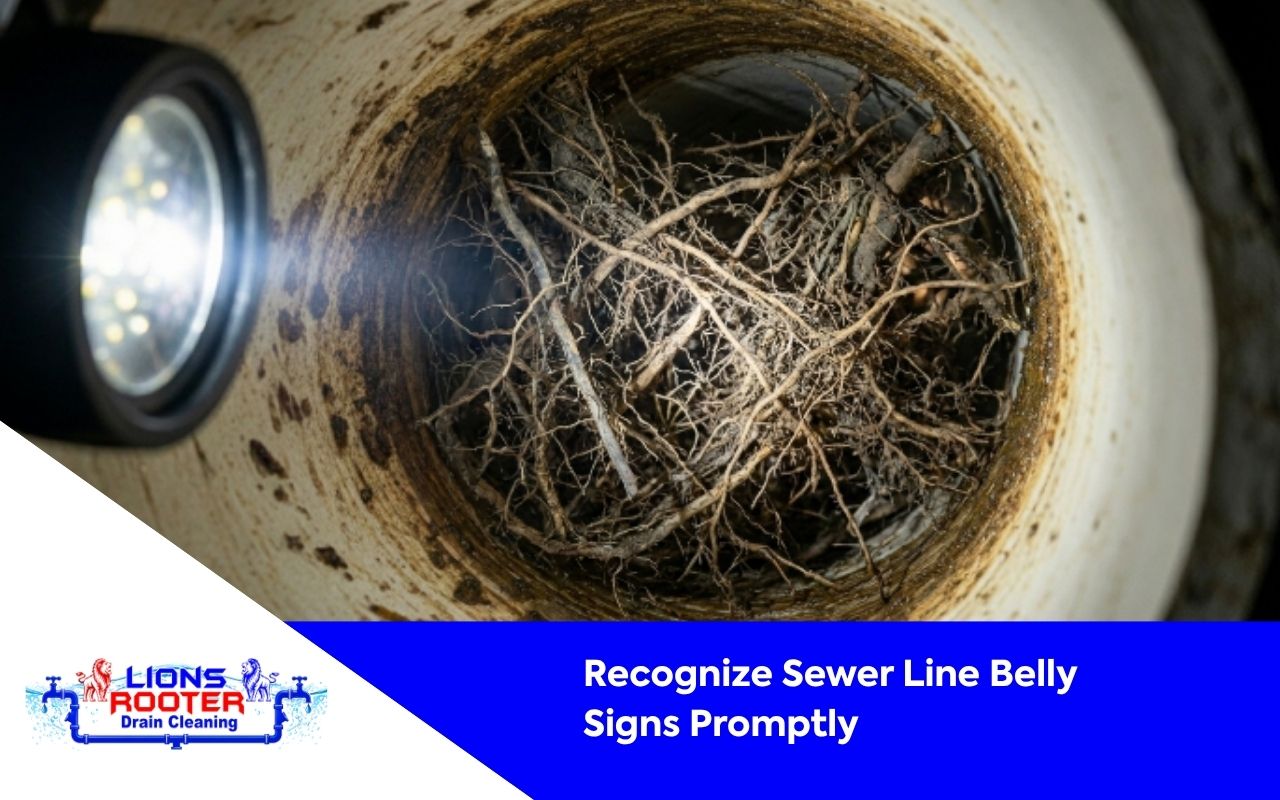
A camera inspection lets us see inside the sewer line without guessing. We guide a small camera through the pipe to look for low spots, trapped water, roots, cracks, and buildup that may point to a belly.
This step is useful because surface signs do not always show the full problem. With video evidence, Lions Rooter Drain Cleaning can explain what is happening, where the issue is located, and what repair choices may make sense.
Simple Checks Before Calling For Service
You can watch for sewer line belly signs before the problem becomes urgent. Start by checking how water moves through your home and whether several fixtures are draining slower than usual.
Run water in one fixture at a time and listen for bubbling sounds
Check low drains for water rising after toilets are flushed
Look near outdoor cleanouts for wet soil or foul odors
Note when slow drains happen after heavy water use
These checks can help you describe the issue clearly when you call. However, they cannot replace a professional sewer camera inspection in Tacoma when the problem is inside the buried line.
Repair Choices For A Sewer Line Belly
Repair needs depend on the size, depth, and location of the belly. A mild issue may need cleaning and monitoring, while a deeper sag may need pipe repair or replacement to restore the right slope.
Drain cleaning may clear buildup, but it may not fix the low spot
Pipe lining can improve the inside wall when the pipe shape allows it
Pipe replacement may be needed when the sag is deep or the pipe is damaged
Before choosing a repair, Lions Rooter Drain Cleaning reviews the camera findings and explains practical options. You can also read our guide on sewer line replacement cost factors to understand what may affect the scope of work.
Frequently Asked Questions
What are the most common sewer line belly signs?
The most common signs include slow drains, gurgling sounds, sewer smells, standing water in the yard, and sewer backup in low fixtures. These signs often mean waste is collecting in a low section of pipe.
Can a sewer line belly fix itself?
A true belly usually does not fix itself because the pipe has moved out of its proper slope. Cleaning may help for a short time, but the low spot can keep collecting waste.
Is standing water always caused by a sewer belly?
Standing water can come from several causes, including poor yard drainage, broken pipes, or a sewer belly. A camera inspection helps confirm whether the sewer line is part of the problem.
When should I schedule a camera inspection?
Schedule an inspection when several drains are slow, backups return after cleaning, or wet spots appear near the sewer path. Lions Rooter Drain Cleaning uses this step to find the issue before recommending repairs.
Can pipe sag lead to a full sewer backup?
Yes, pipe sag can lead to a full backup when solids build up and block the line. Acting early helps protect your home from dirty water, odors, and damage.
Protect Your Home With Timely Action
Fast action can help you avoid messy repairs and unsafe conditions. When sewer line belly signs appear, it is better to check the line early than wait for a major backup or damage around your home.
Lions Rooter Drain Cleaning is ready to help you understand the problem and choose the next step with confidence. To discuss your concerns, use our Tacoma sewer camera inspection page and take care of your sewer line before the issue grows.